

AI Round-up for 10.24.25: MAICON! (And a lot more.)
The AI Round-up: Year 3, Issue 34
I’m gonna be honest. I feel a little pressure with today’s edition of The AI Round-up.
Here we are, a week after MAICON. My brain still a little fried. My Claude credits expired. My Sora2 invite still lost in the mail somewhere. And me, wanting to deliver on the promise of a MAICON recap.
Oh, and doing it in a week where there is SO much AI news.
So, here’s what we’re going to do – I’m going to recap MAICON below, going heavy on the MAICON and a little lighter on the links and editorial. But dammit, there’s so much to report. I tried my best.
This way you can read quicker, come back to it, check the links when you have a minute…or throw the whole thing into ChatGPT and ask for a summary. (Eh, I’ll just do it for you.)
So, let’s get to it. Up first—MAICON.
I won’t bury the lead. The conference was amazing, once again. Well run. (Christopher Penn went as far to compare it to Disney World.) Incredible presentations and speakers. And a genuine opportunity to connect with people who share the same interest and passion about the ‘how’ and ‘why’ of AI. (You can listen to Paul and Mike recap it in this week’s first podcast – they had two this week.)
There’s no real way to capture everything it had to offer here. And I don’t think that’s really my goal anyway. Instead, I want to pass along some of the high-level takeaways that I think you might be interested in. These are my takes on the conference:
1. Move 37. For the second year in a row Paul opened the show with what I thought was a perfect tone-setter. Last year was about the road ahead of us and how we should start to think about being prepared. This year was about how to be a driver on that road.For listeners of his pod, he talks about the documentary Alpha Go quite a bit. The movie that profiled how the number one ranked Go player in the world, Lee Sedol, lost to Google DeepMind, an AI program designed to play the game. But it goes way beyond that, and Paul used clips and commentary to articulate this point. (You can watch the full documentary for free on YouTube.)
Move 37 is the move AI made that left everyone stunned. A move no one had ever thought of before. It sent a tremor through the room and left Sedol genuinely shook. That moment is what Paul challenged us with – what will you do when you realize AI is ‘better’ than you at what you have worked so hard to do?
Now while that sounds like it was a heavy ask, for a lot of us in the room…it’s happened. So for me, the story is much more about move 78. A move that Lee counters with in a future game against the AI that was born out of move 37. A move that AI had not planned for in running all of its scenarios. A move that proved a machine made the human better…and that a human can still create what AI cannot see or predict.
Have you seen your own personal move 37? Are you prepared for your move 78?
2. The ‘hidden slides’. One trend I took away from a lot of the presentations—this year wasn’t for those who are AI newbies. Now, sure…there were presentations for all levels of AI thinkers but to me, most of the content was geared towards those who had taken the step beyond ‘using’ and are now focused on ‘engaging and applying’.I joked with someone that I wanted to see the ‘hidden slides’ in these presentations. The ones that laid out the future or consequences to those in the audience that didn’t know what the presenters were talking about…while everyone else marveled and took notes. But in reality, it struck a nerve.
Have we hit a point where it stops becoming the company’s responsibility to bring those along who aren’t using/don’t want to use AI? Is this the great sorting hat that starts to identify who will drive the company the forward? The hunters and gatherers v. just those who ‘eat’? Those giving the presentations may disagree but to me, the slides I saw weren’t for the beginners.
3. AI employees. More than one presentation talked about your future as a manager. And the fact it won’t be full of just ‘human’ employees. For the first time I had a clear view of what the team of the future will look like. This wasn’t a futuristic scenario. One that might happen. These were examples of how companies are working this way now…and how that will (quickly) evolve to go mainstream. If that sounds disruptive, it is. These are the things…the thinking…that we just aren’t ready to process. (And maybe we’re not meant to, if you believe Brene Brown. Which I do.)
4. 1,500. Just a quick note to say ‘wow, this has grown from 200 to 1,500 in five years’….but ‘wow, why aren’t more companies taking advantage of this conference??’ It’s a must, so leave room for it in next year’s budget.
5. Finally…SEO. AEO. And all the EO’s. Oh my. Guys. This, is a game changer. I could do a whole round-up on JUST this topic.
As a whole, we are not ready for this. Not even close.
How you search, shop and buy has changed. How people go to your site. Find your site. It’s all changed. What AI values v. traditional search so you CAN be found, has changed. Your metrics, if they haven’t already, are changing.
One thing that hasn’t changed? Your boss, who holds you accountable for all of this including sales. They are still looking for the same bottom-line metrics. And they may not care that all of this has changed.
So you will have to be the one that cares. To fight for this new thinking. To challenge and educate. It won’t be easy but it’s critical.
Akhia is all over this – has been for the past four months:
- We are partnering with a software company that can eliminate the guessing games in terms of how the LLMs are interacting with your content.
- We have changed the way in which we write and are working to educate our clients on what this means.
- We are helping clients understand the new metrics.
- And most importantly, we are fully embracing that the key to unlock the new metrics is…public relations. A more thoughtful, focused, position-based and cost-efficient method.
If you haven’t had a conversation about this and are wondering where to start, we can help.
But here’s the bottom line from MAICON: you MUST start.
I hope I did MAICON 2025 justice. If you were there and want to compare notes, let’s talk! If you want to learn more or have additional questions, reach out. And stay tuned – we are going to have a virtual MAICON roundtable for anyone who wants to talk, share ideas, etc. (whether you attended or not).
Anyway, onto this week’s stories.
7 stories -- Let’s get to it.
Story 1: We’re going to start in the ?EO world.
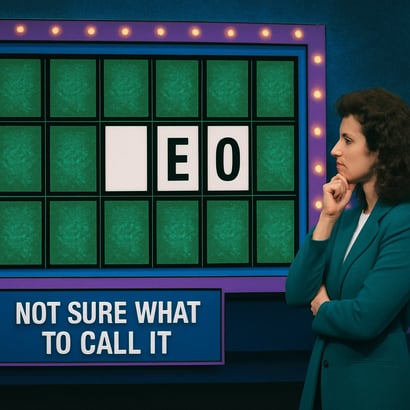 Image: Mike Lawrence
I know I said I’d keep the editorial short. So here are some resources and stories on the future of search.
The read: Chrome can now summarize news stories within seconds. (digitaltrends)
My takeaway: Pitching/media placement just got a lot more important. (Can’t rely on just your newsroom to get the word out.)
The read: Wikipedia says traffic is slumping due to generative AI search. (TechCrunch)
My takeaway: Is no one immune? (Nope.) So this is showing that 1. People don’t care as much where their news comes from (or the accuracy of it) and 2. This is a direct impact of how Gen Z now searches.
The read: Introducing the next generation of Yelp assistant. (Yelp)
My takeaway: We’re moving from people doing the searching (for a restaurant, hotel, retailer, etc.) and into the agents doing it. Agents will listen to and gather info from…other agents.
The read: AI chatbots fail at reporting accurate news (DW)
My takeaway: So, we have to do all of this and safeguard and monitor our content? Yep. Can you imagine if you didn’t do anything?!?
The read: Most PR teams are about to be blindsided by AI search. (LinkedIn)
My takeaway: Not this PR team.
Story 2: This could’ve fit in story 1, technically, but did you know there’s a new ChatGPT browser?!?! (digitaltrends)
Of course you did. You read this newsletter so I’m guessing you are plugged in. But everything we’ve been talking about with AI search is through the lens of the traditional search engine (Google). What happens when it’s an AI browser? (Which, Google is kind of becoming…but you get the point.)
Story 3: AI will help you pick the perfect avocado (Popular Science)
Why am I talking about avocados? Well, the story is about using AI to scan products in store. And since a lot of you work for companies that make products, some of which are sold in stores…well, I know I’m wondering what this means for how people will interact with your product and if they buy it. (Imagine: scanning a product and seeing three quick things you can do with it…or an instructional video? Or an ad? The possibilities seem endless.)
Story 4: Bryan Cranston gave Sora 2 a warning. Sora 2 listened. (NBC)
Well, he IS the one who knocks, ya know.
Story 5: Copilot announces some big updates. (Conor Grennan)
Story 6: OpenAI is adulting. No, I mean adulting. (Reuters)
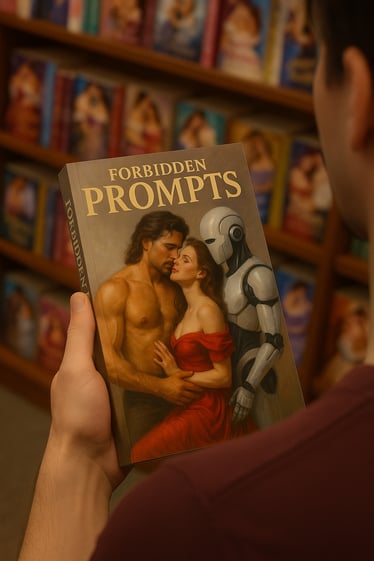
Image: Me and ChatGPT
Whatever it is we’re trying to do here, Ohio is having no part of it. (Futurism)
I’m not making any of this up!!!
Story 7: We started with talking PR. Let’s end with talking ads.
Two stories (cautionary tales?) on what’s happening with AI and ads.
First: AdCP is here. But what is it? (Shelly Palmer) Remember when I talked about agents talking to agents? Yeah. That.
Second: Google Ads to generate ads from existing Demand Gen image ads. (SearchEngineLand)
This week, I’m not talking about:
- AI slop is now coming for Spotify (Futurism)
- School’s AI detector mistakes a Doritos bag for a gun. (WBAL TV11)
- AI headshots are changing the way job seekers are seen. (NBC)
Thanks for reading,
Ben
As a reminder, this is a round-up of the biggest stories, often hitting multiple newsletters I receive/review. The sources are many … which I’m happy to read on your behalf. Let me know if there’s one you’d like me to track or have questions about a topic you’re not seeing here.