
A Practical Guide to Trade Show Management
This one goes out to the 'marketing will do it' crowd!
If you've been handed responsibility for your company's trade show presence—along with everything else on your plate—this guide is for you. No jargon. No marketing-speak. Just a practical framework you can follow, adjust, and defend to leadership when they ask what you're doing and why.
First, Let's Be Honest About What Trade Shows Actually Are
Trade shows are expensive. When you add up booth space, travel, hotels, staff time away from their regular jobs, and all the materials you'll need, you're looking at one of the biggest line items in most manufacturing companies' marketing budgets.
That's pressure. And if you didn't come from a marketing background, it can feel like you're supposed to just "know" how to make this work. Here's the truth: most people don't. Even experienced marketers struggle with trade shows because there are so many moving pieces.
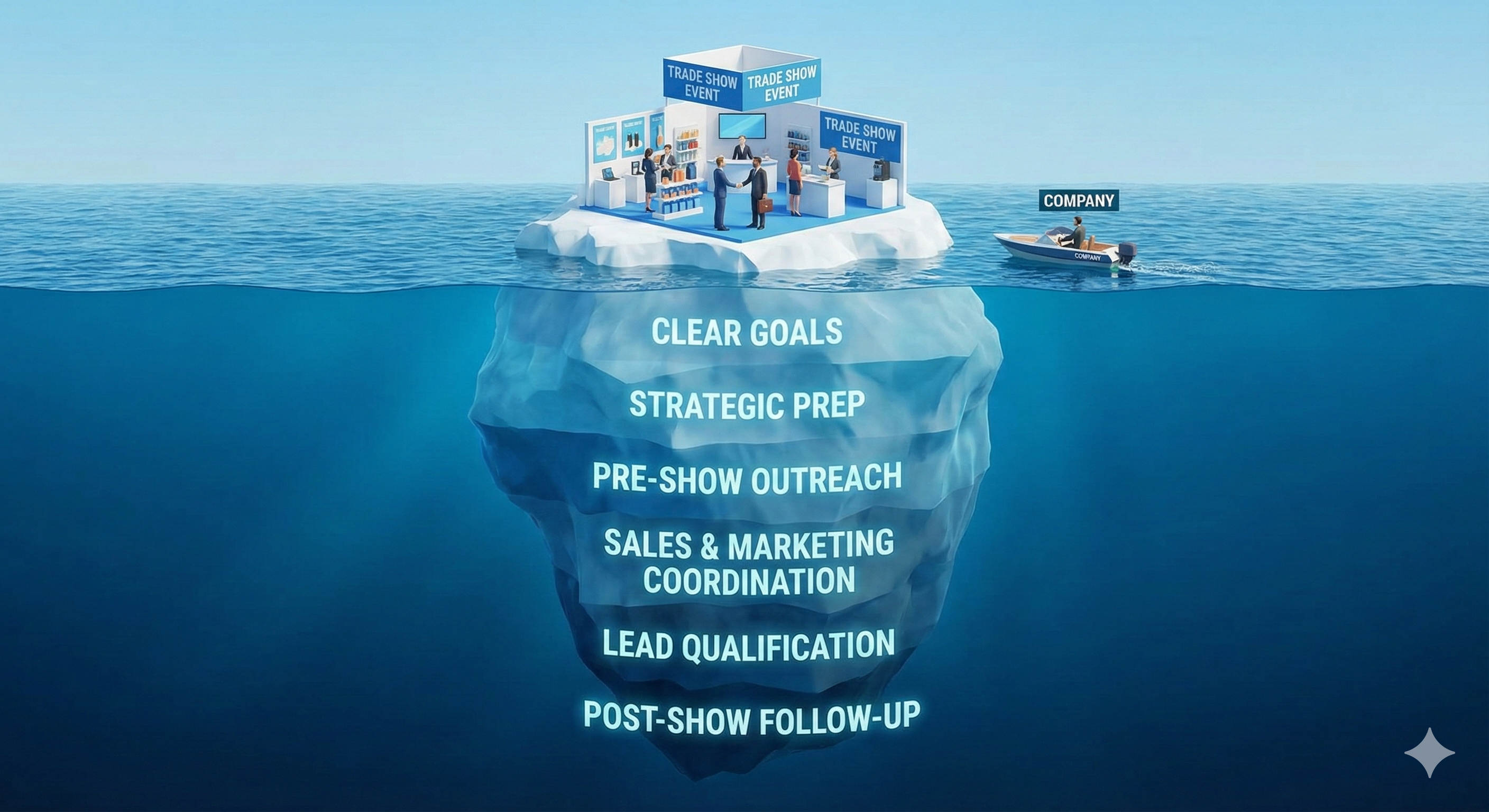
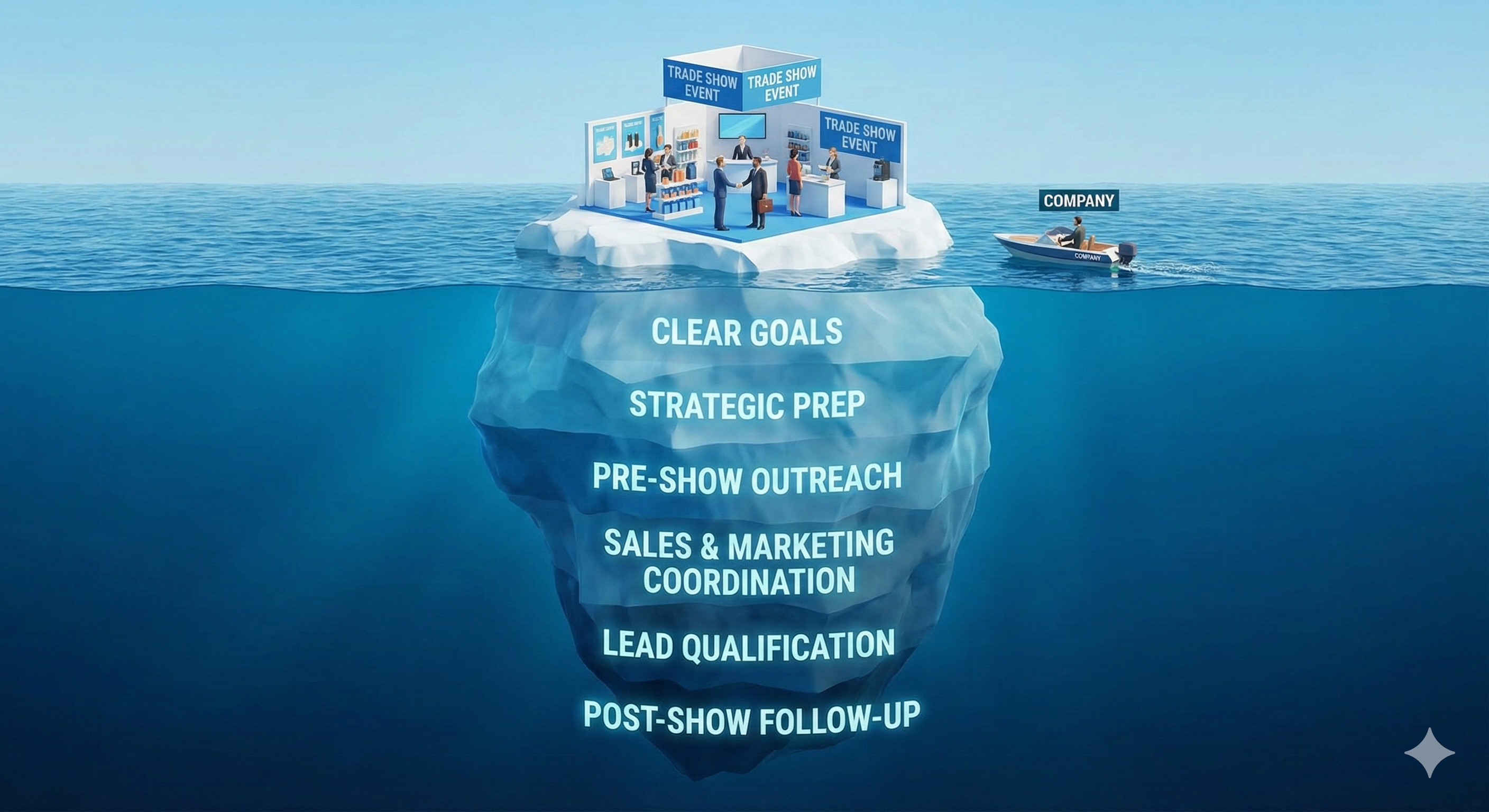
The good news? The difference between a trade show that generates real business and one that just burns budget usually comes down to three things: having clear goals, doing the right prep work, and actually following up afterward.
That's it.
The companies that do those three things well see returns of 10-20x their investment. The companies that "wing it"? Well they end up with a pile of business cards and wonder why nothing came of it.
Start with objectives you can explain (and defend)
Before you book anything or buy anything, answer this question: What does success look like for this show?
Don't skip this step. It's the foundation for every other decision you'll make, and it's what you'll use when your CEO asks "So, was it worth it?"
Here's a framework. Pick two or three objectives—not more—from categories like these:
Lead Generation
This is about finding new potential customers. Your objectives might sound like: "Generate 25 qualified conversations with companies in the automotive sector" or "Schedule 10 follow-up meetings with decision-makers before leaving the show." Notice how specific these are. "Get leads" isn't an objective. "Get 25 qualified leads from automotive companies" is.
Relationship Building
Trade shows are often the one time a year you can get face time with existing customers and target accounts. Objectives here might be: "Meet in person with our top 10 accounts" or "Have dinner conversations with five prospects we've been trying to reach all year."
Market Intelligence
Trade shows let you see what competitors are doing and hear directly from the market. Objectives might include: "Gather competitive information on three specific competitors' new offerings" or "Understand what challenges customers are talking about in our target segment."
Visibility
Sometimes the goal is being seen. This is harder to measure but still valid: "Position our company as a leader in this space" or "Launch our new capability to the industry."
Why only two or three objectives? Because trying to do everything means doing nothing well. Your objectives should drive every other decision: who staffs the booth, what you feature, who you reach out to before the show, how you qualify the people you talk to, and what you measure afterward. If you have seven objectives, you can't optimize for any of them.
The Preparation That Actually Matters
Here's something most people don't realize: the real competition doesn't happen on the show floor. It happens in the weeks before (when you should be scheduling meetings) and after (when your competitors are failing to follow up). This is where you win.
30-60 Days Before: Strategic Work
This is when you make the decisions that will determine whether the show succeeds.
Create your "A-list." Identify the 15-20 prospects and customers you most want to connect with at this show. These are the people worth extra effort—personal outreach, dinner invitations, scheduled meetings. Don't just show up and hope they wander by your booth.
Coordinate with your sales team. If you have salespeople, they need to know about this list and help reach out. Trade shows work best when sales and marketing coordinate. A marketing email followed by a sales call is more effective than either alone.
Confirm who's working the booth and what they'll do. Not everyone should do the same job. Some people are great at starting conversations. Others are better at technical deep-dives. Assign roles based on strengths.
Book your off-floor time. Start making restaurant reservations and scheduling meetings outside the booth. These conversations—over dinner, in a quieter setting—are often where the real relationship-building happens.
About 30 Days Before: Tactical Execution
Now you're getting into the logistics that will make everything run smoothly.
Check all your physical materials. Signage, demos, brochures, giveaways—make sure everything exists, works, and looks professional. Nothing undermines credibility like a demo that doesn't work or a banner with last year's messaging.
Brief your booth staff. What are the key messages? What product or capability are you emphasizing? What questions should they ask to qualify visitors? Consider creating a simple "booth script" so everyone's on the same page.
Set up lead capture. How will you record information about the people you talk to? Badge scanners, digital forms, even a shared spreadsheet—whatever you use, test it and make sure everyone knows how to use it.
Create a competitive intelligence template. If gathering market intelligence is one of your objectives, give your team a simple form to capture observations about competitors. Otherwise, they'll forget what they saw by the time the show ends.
7-10 Days Before: Final Details
- Confirm all scheduled meetings
- Do a final walkthrough with staff on qualification criteria and follow-up responsibilities
- Set up a shared document or chat thread for real-time notes during the show
- Designate someone to capture photos and content for social media or internal updates
- Triple-check administrative details: hotel, flights, car rentals, restaurant reservations
At the Show: What Matters Most
When the show starts, most of your decisions are already made. Now it's about execution.
The Qualification Question
Train your booth staff to qualify before presenting. A simple opening question like "What brought you to our booth today?" tells you immediately whether you're talking to a potential customer, a competitor, or someone who just wanted the free pen. This saves time and ensures your best conversations happen with the right people.
Capture the Right Information
For every meaningful conversation, record: the person's name and company, their specific interest or challenge, what follow-up action makes sense, and their timeline. Without these details, follow-up becomes generic and ineffective.
Team Discipline
This sounds basic, but it matters: no phones in the booth, no sitting, no eating during show hours. These things signal that you're not serious about being there. Rotate breaks so the booth always has energy. And do a short team debrief at the end of each day to share what you're learning and adjust if needed.
After the Show: Where Most Companies Drop the Ball
This is the moment of truth. Most trade show investments fail not because of what happened at the show, but because of what didn't happen after.
Within 48 Hours
Sort your leads into categories (hot, warm, cold) based on your qualification criteria. Assign follow-up ownership—every lead should have one person responsible for it. Then send personalized follow-up to all qualified leads. "Personalized" means referencing the specific conversation you had. "It was great meeting you at the show" isn't personalized. "I enjoyed discussing your challenges with aluminum welding in high-humidity environments" is.
2-4 Weeks Post-Show
This is when the real work begins. Complete every promised follow-up. Move qualified opportunities into your sales process. Share the intelligence you gathered with relevant teams—product development might want to know what customers are asking for; sales might benefit from competitive insights.
Finally, hold a team retrospective. What worked? What didn't? What would you do differently? Document this so you're not starting from scratch next time.
The Bottom Line
Trade show success isn't about having the biggest booth or the flashiest materials. It's about preparation, focus, and follow-through. Set clear objectives that align with your business goals. Do the strategic work early. Execute with discipline at the show. And follow up like your investment depends on it—because it does.
You don't need to be a marketing expert to do this well. You need a system, the discipline to follow it, and the willingness to learn from each show. The framework above gives you something you can point to, explain to leadership, and improve over time.
That's how you turn a trade show from a question mark into a measurable investment. See the form below? That's how you can get started if you still have questions or want our help.
Or you can email ben.brugler@akhia.com